iSMART Learning Objective
🛠️ Skills Gained
By the end of this course, students will have developed:
-
-
A solid understanding of the principles of flight and aerospace design.
-
Proficiency in applying Newton’s laws to aeronautical contexts.
-
Familiarity with the components and classifications of airports and runways.
-
Knowledge of aircraft control surfaces and their functions.
-
Insight into various propulsion systems, including piston, jet, and cryogenic engines.
-
Experience with flight instruments and their applications.
-
Exposure to real-world aerospace environments through expert sessions and field visits.
-
Exposure to aviation career paths through expert talks and visits
-
What is Aerospace Engineering?
Aerospace Engineering is the branch of engineering that designs, develops, tests, and manufactures aircraft, spacecraft, satellites, and missiles. It includes both aeronautical (within Earth’s atmosphere) and astronautical (beyond Earth’s atmosphere) disciplines, integrating physics, materials science, propulsion, and control systems.
History of Aircrafts
-
1903 – Wright Brothers achieve the first powered flight.
-
1910s–1940s – Rapid advancements during WWI & WWII in military aviation.
-
1950s–1970s – Jet engines, commercial airliners, and space race innovations.
-
2000s–present – Rise of drones, reusable rockets, and sustainable aviation technologies.
Nobel Prize Winners Related to Aeronautics
Though no direct Nobel Prize category exists for Aeronautical Engineering, related Nobel Prizes in Physics and Chemistry have greatly influenced the field:
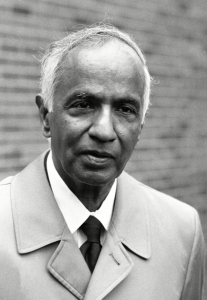
Subrahmanyan Chandrasekhar (1983, Physics) – Stellar dynamics influencing space science.
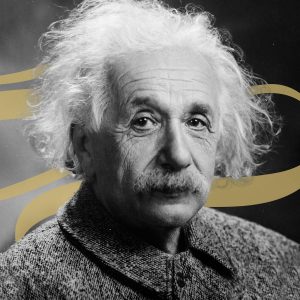
Albert Einstein (1921, Physics) – Theoretical foundation for space-time and aerodynamics.
Richard Feynman (1965, Physics) – Quantum mechanics and aerospace material studies.

Top Diploma Courses after Grade 10
-
Diploma in Aeronautical Engineering
-
Diploma in Aircraft Maintenance Engineering (AME)
-
Diploma in Aviation Hospitality
-
Diploma in Aerospace & Avionics
-
Diploma in Ground Staff and Cabin Crew Training
-
Diploma in Airport Operations Management
UG Courses after Grade 12
-
B.Tech in Aeronautical Engineering
-
B.Tech in Aerospace Engineering
-
B.Sc. in Aviation Science
-
B.E. in Aircraft Maintenance
-
B.Tech in Avionics
-
BBA in Aviation Management
-
B.Sc. in Space and Atmospheric Sciences
Job Opportunities in Aerospace & Aviation
-
Aeronautical Engineer
-
Aircraft Maintenance Technician
-
Avionics Engineer
-
Airport Operations Executive
-
UAV (Drone) Pilot/Technician
-
Air Traffic Controller
-
Flight Instrumentation Engineer
-
Research Assistant in Space/Aerospace Labs
-
Pilot or Cabin Crew (with additional training)
-
Aerospace Materials Analyst
